

If you're starting a new business, freelancing, contracting, or delivering for gig-economy platforms, you may need an Australian Business Number (ABN). An ABN is used to identify your business to clients and agencies and is required for invoicing, registering for GST, and operating as a sole trader.
This guide outlines the different ways you can apply for an ABN and includes a clear, step-by-step example of how the process works when applying through Register My ABN.
There are three common options to apply for an ABN as a sole trader.
The ABR is the official government website that issues ABNs.
Pros
Cons
This option is generally used by people comfortable navigating government forms.
Some accountants and registered tax agents can submit ABN applications for clients.
Pros
Cons
Register My ABN provides a simple online form designed for sole traders, written in simple English. Below is an example of the exact step-by-step process.
You can register for a sole trader ABN using Register My ABN in 2 minutes with 6 easy steps. Follow the instructions below and get your sole trader ABN simply.
To be eligible for a sole trader ABN, you must be starting or running a business, which may include:
The ATO assesses eligibility based on whether a person is operating or intending to operate a business.
Great! Now that you’re eligible for an ABN, you’ll need to provide your:

These details must match ATO records. Accurate information helps the ATO verify your identity when assessing an ABN application.
You’ll provide:
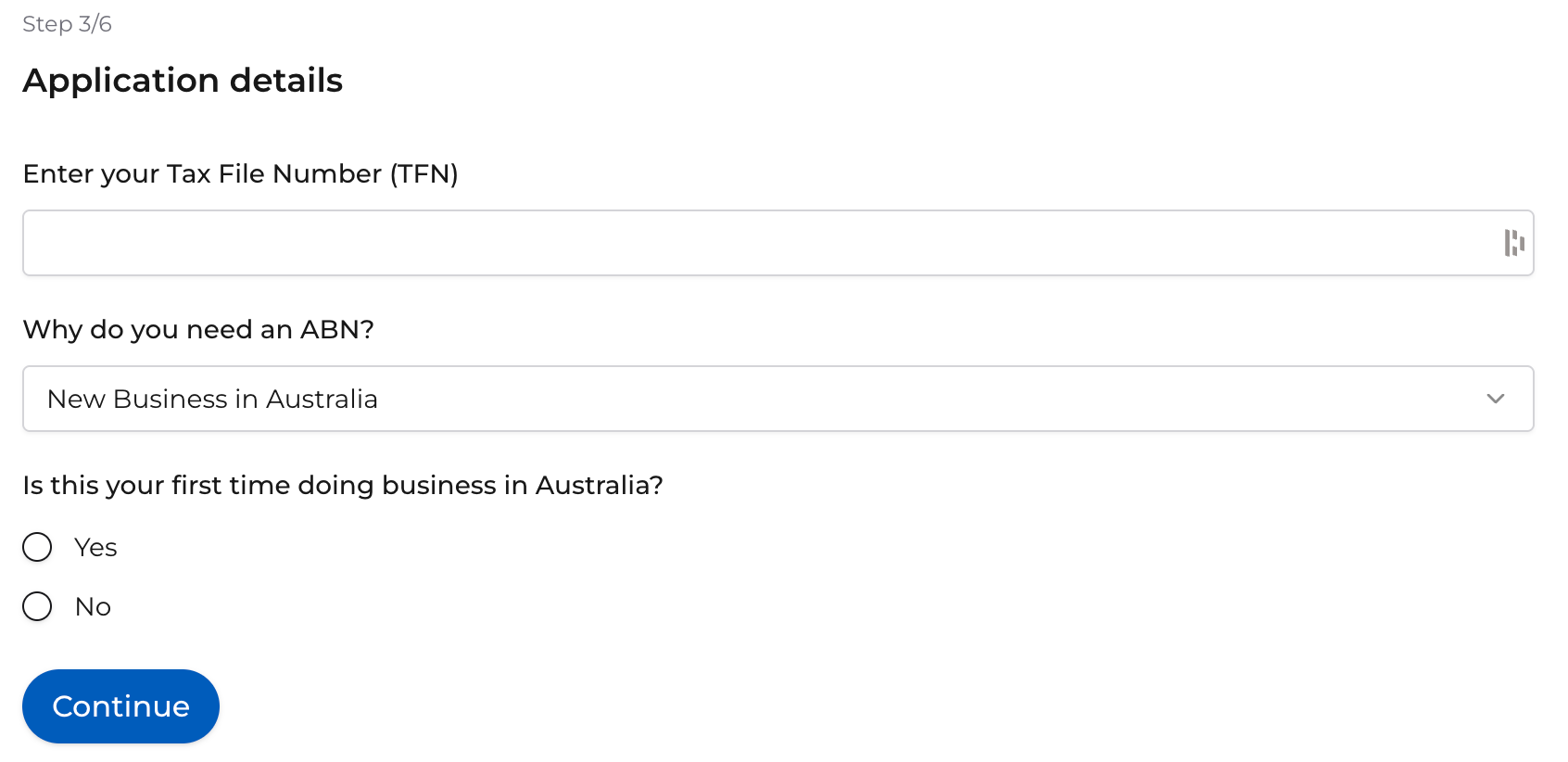
Common reasons for applying for an abn is new business in Australia, contractor / subcontractor and the receive payment for services.
Once you’ve provided your TFN and ABN reason, you’ll need to provide more details about your business including your:
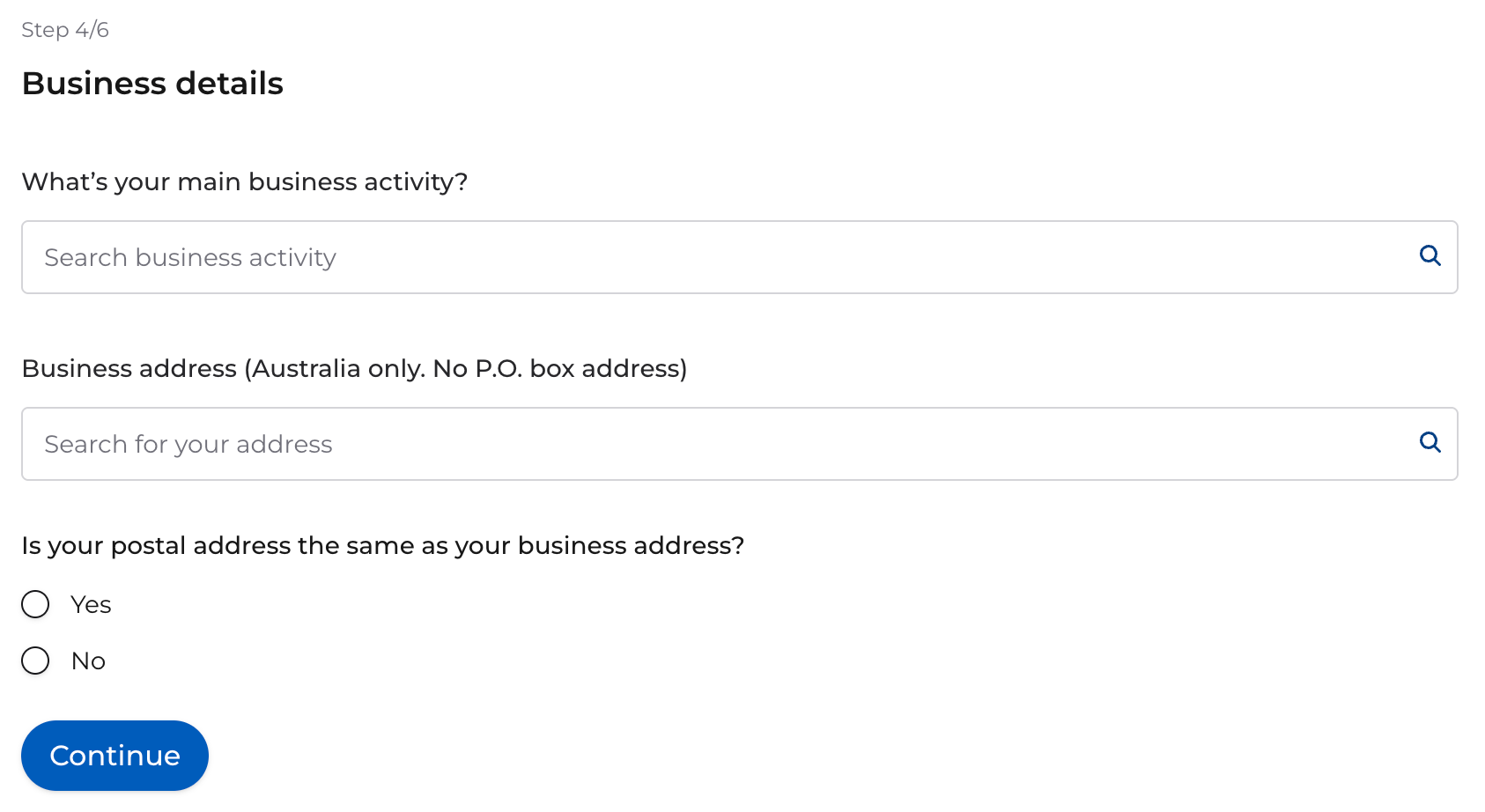
As a sole trader, your business address is typically the same as your home address if you do business mainly at home. Your business address cannot be a P.O. box address. Alternatively if you don’t want to put your home address, you can also get a virtual address to use instead.
Once you have an ABN, your ABN details are available via the Australian Business Register (ABR) public lookup and it will show your suburb and postcode. You can request for a non-disclosure of ABN details from the ABR if publishing the information may be a risk to your personal safety or the safety of anyone associated with the business.
You’re almost there! As part of your ABN registration with Register My ABN, you also have the option to register a business name and / or GST.
You will need a business name if you are not trading under your own name. For example, if your name is John Smith:
Trading as "John Smith" → No business name required
Trading as "John’s Plumbing" → Business name required
You need to register for GST if you drive for rideshare (like Uber or DiDi), taxi, or limousine services, or if your business earns $75,000 or more in a year. Some sole traders also choose to register voluntarily to claim GST credits.
That’s it! Once you’ve paid the ABN registration fee of $45, your application will be securely lodged with the ATO. Most sole trader applications receive an instant decision: